TL;DR
Website readability is shaped by structure, spacing and clarity rather than content alone. Websites that present information clearly are often easier to read, more trustworthy and better at holding attention.In contrast, poorly structured pages often create friction before the content itself is fully understood.
The quality of a website is often judged before a visitor consciously thinks about it.
Readers quickly notice whether a page feels easy to navigate, whether the content appears approachable and whether the overall structure creates clarity or confusion. These reactions happen almost immediately, and they strongly influence how long someone stays on a site.
This is where website readability becomes important.
Readability is not simply about writing style. It is shaped by how information is organised, spaced and presented visually. Even strong ideas can lose impact when the structure surrounding them creates unnecessary friction.
Websites that feel readable encourage visitors to continue. Websites that feel difficult to process often lose attention within seconds.
Structure Shapes the Reading Experience
One of the biggest factors affecting website readability is structure.
Readers rarely approach online content word by word from the beginning. Instead, they scan first. They look for visual organisation, headings, spacing and signs that the content will be easy to follow.
A well-structured page supports this behaviour naturally.
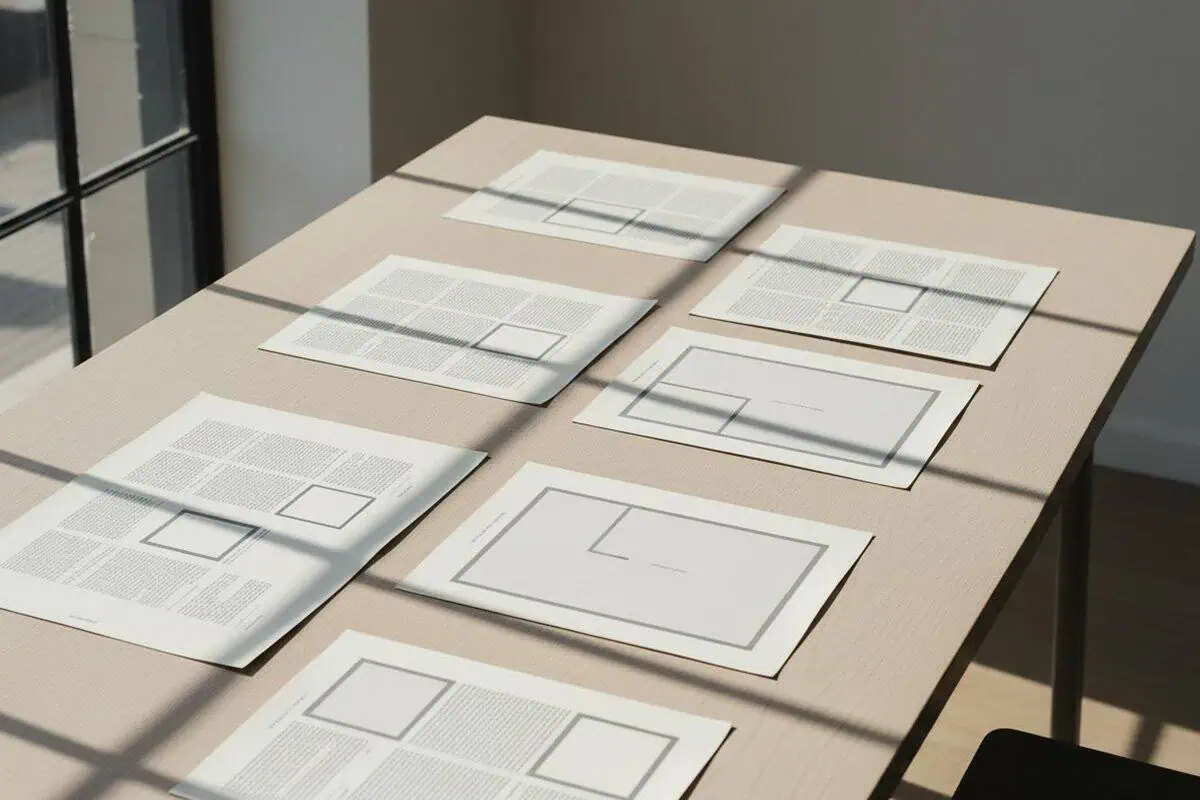
Clear headings divide ideas into manageable sections. Paragraphs remain readable rather than dense. Spacing creates separation between topics, allowing the eye to move comfortably through the content.
This structure quietly guides the reader.
As explored in Website Engagement: Why Some Sites Hold Attention, clarity and organisation strongly influence how long visitors remain engaged with a page.
Studies from Baymard Institute have highlighted how clear structure and readable layouts influence the way users move through digital content.
Readability Creates Trust
Readability also affects perception.
When content appears cluttered or difficult to process, readers often question the overall quality of the website. Even if the information is accurate, poor presentation weakens credibility.
Readable websites create the opposite effect.
Structured layouts, balanced spacing and clear typography communicate care and intention. The site appears more thoughtful because the reading experience feels considered.
This aligns closely with Why Trustworthy Websites Feel Credible Within Seconds, where visual coherence influences trust before visitors fully process the content itself.
Readability is therefore not only functional. It is psychological.
Simplicity Reduces Friction
Many websites become harder to read because they introduce too much friction.
Large blocks of text, excessive visual elements and inconsistent layouts force readers to work harder than necessary. Over time, this effort reduces attention.
Simpler websites often perform better because they remove unnecessary obstacles.
Content becomes easier to absorb when the structure feels calm and predictable. Readers can focus on the ideas themselves rather than constantly adjusting to the design surrounding them.
This does not mean websites should feel empty or minimal purely for appearance. Simplicity works when it improves clarity.
In many cases, restraint creates a stronger reading experience than complexity.
Readability Is More Than Typography
Typography matters, but website readability extends beyond fonts alone.
The flow of information is equally important.
Readers should understand where one idea ends and another begins. Subheadings should create rhythm within the article. Supporting sections should feel connected rather than isolated.
This creates continuity.
Instead of reading fragmented blocks of information, visitors move through a coherent sequence of ideas. The experience feels guided rather than improvised.
This principle connects closely with The Real Difference Between Publishing and Posting, where structure helps transform isolated content into purposeful publishing.
The Role of Focused Websites
Focused websites are usually easier to read because they follow a more consistent structure.
The tone remains stable. Topics connect naturally. The layout supports the subject matter rather than competing with it. Readers quickly understand what the site is trying to communicate.
This consistency reduces cognitive load.
Visitors do not need to repeatedly reorient themselves while moving between pages. The website gradually develops a consistent rhythm that encourages continued reading.
As discussed in Why Intentional Websites Stand Out Online, clarity of direction strengthens the overall experience of a digital project.
Readability benefits from that same intentionality.
Why Readability Matters More in 2026
The internet continues to accelerate.
Content is produced at increasing speed, often with limited attention given to how it is experienced by readers. Many pages prioritise visibility and output while overlooking structure and readability entirely.
This creates opportunity for websites that approach publishing differently.
In an environment filled with distraction, readable websites stand out because they respect attention. They make information easier to process and allow visitors to engage without unnecessary friction.
As digital publishing becomes more competitive, the quality of the reading experience becomes increasingly important.
Readability Encourages Deeper Engagement
Strong readability does more than improve appearance.
It encourages visitors to stay longer, explore further and return again in the future. When content feels approachable, readers are more likely to continue through additional sections and related articles.
This creates deeper engagement over time.
A readable website supports sustained attention rather than quick interaction alone. The site becomes easier to revisit because the experience itself feels reliable.
In this way, readability contributes directly to long-term trust and audience retention.
Why Structure Quietly Defines Quality
Many of the strongest websites share a common characteristic: structure.
Their content feels organised, balanced and intentional. The layout supports the material instead of distracting from it. Readers move naturally through the page without needing to think about the process itself.
This is what strong website readability achieves.
It allows ideas to be understood more clearly by reducing friction between the reader and the content. In many cases, the structure surrounding information becomes just as important as the information itself.
And online, that difference is often what separates readable websites from forgettable ones.